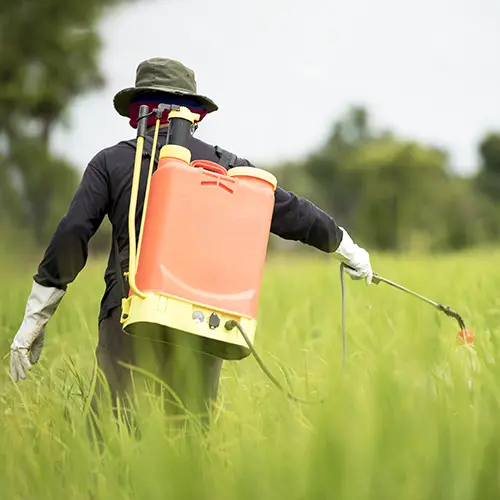
California will soon start telling the public where "forever chemical" pesticides are being sprayed. On September 27, 2026, Governor Gavin Newsom signed AB 1603, by Assemblymember Nick Schultz (D-Burbank), which requires the state's Department of Pesticide Regulation (DPR) to track and publish the use of pesticides that contain PFAS.
PFAS (per- and polyfluoroalkyl substances) are a large family of fluorinated chemicals that break down very slowly in the environment, which is why they are often called "forever chemicals." Most attention has gone to PFAS in cookware, cosmetics, clothing and drinking water. This law focuses on a less discussed source: the pesticides used on crops.
What the new law requires
- A PFAS label in the state's pesticide use database. By January 1, 2028, or when DPR posts its 2026 pesticide use data, whichever comes first, the department must mark which pesticides contain PFAS ingredients and make PFAS a category that can be searched. This will then be done every year.
- Trends in annual reports. DPR's annual pesticide use report must include trends in the use of PFAS pesticide ingredients.
- A public list. By January 1, 2028, DPR must publish a list of every registered pesticide that contains PFAS ingredients and send it to each county agricultural commissioner. The list must be updated within 60 days whenever a new PFAS pesticide is registered.
- A broad definition. The law defines PFAS as "a class of fluorinated organic chemicals containing at least one fully fluorinated carbon atom." It covers PFAS added to a pesticide "as active, adjuvant, or inert ingredients."
What the law does not do
AB 1603 does not ban or limit any pesticide. As first introduced, the bill would have stopped new PFAS pesticides from 2028, banned 23 PFAS pesticides already prohibited in Denmark by 2030, and phased out the rest by 2035, according to Inside Climate News. Those limits were taken out before the final vote. The same report found that chemical and agricultural interests spent about $900,000 lobbying from January to June. Schultz called the final version "a shell of what we set out to do."
Why it matters
According to Inside Climate News' analysis of state data, California growers applied 14.2 million pounds of PFAS pesticides between 2018 and 2023, an average of about 2.3 million pounds a year. Two of the most heavily used are the insecticide bifenthrin and the weed killer oxyfluorfen, which the report notes the EPA classifies as "possible human carcinogens." California grows a large share of the country's fruits, vegetables and nuts, so what is sprayed there can end up on produce sold nationwide.
At present, the public cannot easily see which pesticides in California's use records contain PFAS. The new law makes that information public, so researchers, communities near farms and shoppers can see how much is used, where, and whether use is rising or falling.
What you can do now
- Wash produce under running water before eating. Washing reduces surface residues, though it does not remove everything.
- Consider organic for the produce you eat most often. USDA organic standards generally prohibit synthetic pesticides.
- Keep an eye out in 2028 for DPR's first list of PFAS pesticides, which will show which products are in use.
- Look beyond food. PFAS also show up in personal care products. Our article on PFAS bans in cosmetics explains which ingredient names to watch for, and our label checker can scan an ingredient list for you. For another widely used farm chemical, see our glyphosate profile.
Sources
- AB 1603 bill text and history, California Legislative Information
- Governor Newsom issues legislative update, September 27, 2026, Office of the Governor
- Industry interests spent big money to stop California from banning PFAS pesticides, Inside Climate News, September 9, 2026
- PFAS Explained, U.S. Environmental Protection Agency