
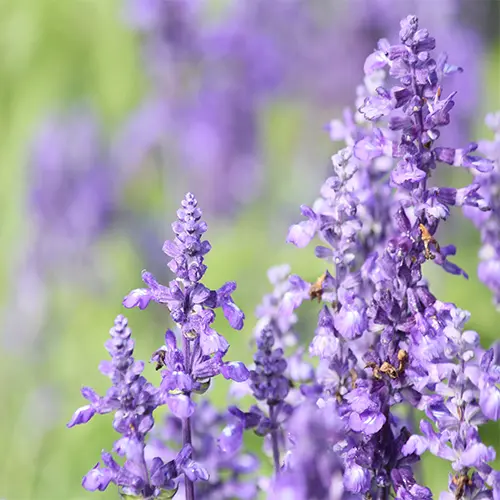
What is it?
Variably called culinary sage, common sage or garden sage, this woody-stemmed, semi-shrubby perennial typically grows 1.5-2.5' tall. Features whorls of two-lipped, lavender-blue flowers (to 1 inch long) in short, upright spikes in late spring. Wrinkled, gray-green leaves (to 4" long) are strongly aromatic and are frequently used fresh or dried in cooking as a seasoning. A mint family member that is attractive to bees and butterflies.
Key information
- Alzheimer's Disease: taking sage may help improve memory and information processing among people who suffer from mild Alzheimer's disease.
- Anti-inflammatory: Researchers at the University of Vienna, Austria published a study in the Journal of Ethnopharmacology suggesting that Salvia officinalis has important anti-inflammatory properties.
More information
Sage was one of the ingredients of Four Thieves Vinegar - a mix of herbs which was made to prevent the plague. This MNT Knowledge Center article forms part of a collection of features on popular foods and their possible health benefits. The scientific name of the herb Salvia officinalis originates from the Latin word "salvere" which in English means "to be saved."
Reference: http://bit.ly/1DGmwOY