What is it?
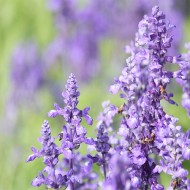
An extract of the flowers of lavandin, Lavandula x intermedia (labeled Lavandula hybrida), a hybrid of true lavender and spike lavender. Its makeup depends on how it is made. Lavandin is solvent-extracted to make concretes and absolutes for perfumery, which carry the plant’s fragrance, while water-and-alcohol extracts of the flowers are rich in polyphenols such as rosmarinic acid and in coumarins. In cosmetics it is listed as a skin-conditioning ingredient.
Key information
- The EU's Scientific Committee on Consumer Safety classifies lavandin oil as an established contact allergen because it is rich in well-known fragrance allergens.
- Since August 2026, new products placed on the EU market must declare lavandin extract, together with lavender and lavandin oils, as Lavandula Oil/Extract above 0.001 percent in leave-on or 0.01 percent in rinse-off products.
- In a 2022 study of water and water-alcohol extracts, lavandin flowers yielded more coumarins than lavender flowers, while lavender yielded more phenolic acids and flavonoids.
- Lavandin essential oils and natural extractives are generally recognized as safe (GRAS) by the FDA for use in food.
More information
Lavandin is a cross between true lavender (Lavandula angustifolia) and spike lavender (Lavandula latifolia). It is best known for its essential oil, whose main components are linalool and linalyl acetate, but the flowers are also extracted with alcohol, water and other solvents. A 2022 study that extracted two lavandin and three lavender cultivars with water and water-alcohol mixtures found rosmarinic acid, caffeic acid, ferulic acid, the flavonoid morin and two coumarins, coumarin and herniarin. The lavandin extracts held more coumarins in every type of extract tested.
We found no safety assessment of lavandin extract by the Cosmetic Ingredient Review (CIR). In its 2012 opinion on fragrance allergens, the EU’s Scientific Committee on Consumer Safety (SCCS) reviewed lavandin under the same CAS number used for the extract. Patch-test data on lavandin oil were limited and showed few reactions, but because the oil is rich in well-known allergens, the SCCS classed it as an established contact allergen. It classes coumarin, found in the water-alcohol extracts, as an established contact allergen too. Following that opinion, the EU now requires lavandin extract and oil, and lavender oil and extracts, to be declared together as Lavandula Oil/Extract above the labeling thresholds.
The practical concern is allergy in people already sensitized to lavender-type fragrance. How much allergen a product contains depends on the type of extract and how much is used, which labels do not show. If you react to lavender or linalool, look for Lavandula Hybrida Extract, Lavandula Oil/Extract, Linalool, Linalyl Acetate and Coumarin on labels. See also our Lavender Oil profile.
Sources: SCCS: Opinion on fragrance allergens in cosmetic products (2012); EUR-Lex: Commission Regulation (EU) 2023/1545 on labelling of fragrance allergens; Antioxidants (2022): Phytochemical Profile and Antioxidant Activity of Lavandula angustifolia and Lavandula x intermedia Cultivars Extracted with Different Methods; Cornell LII: 21 CFR 182.20, Essential oils, oleoresins (solvent-free), and natural extractives